Those concerned with global affairs and disaster assistance often ask: What is one concrete thing that humanitarian organizations and governments could do to increase disaster resilience (see the review piece on the term) in vulnerable areas of the world where families are faced with climate change? The answer is complex and varies with both country and context. This post describes one idea for delivering resilience programing though smartphones and information exchange: The Resilience Network.
What is it?
The Resilience Network connects smartphones with people who are vulnerable, and may face humanitarian situations. It also connects organizations that want to help these people thrive in the face of hazards. See the Rivanna Strategy post on Resilience for the background on this topic.
How does it work?
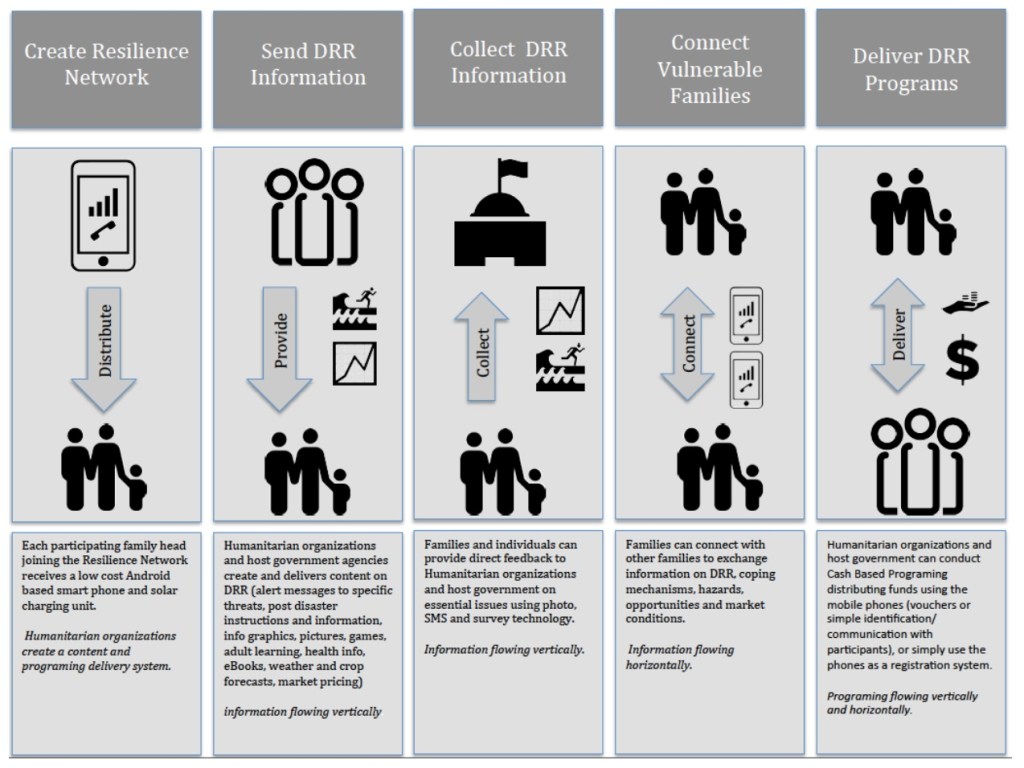
The Resilience Network enhances community resilience through basic mobile technology. It connects communities, individuals, and governments using information technology. This creates a digital foundation for both horizontal and vertical knowledge. It includes information transfer and resilience-based disaster risk reduction (DRR) or humanitarian response programming. The approach creates a digital and organizational network. It connects individuals and families to facilitate participation in humanitarian programming. It allows holistic risk reduction through the increased flow of ideas, systems, and technology. The mobile system provides the infrastructure for cash assistance for humanitarian programming and a wider range of services.
- Each participating family head joining the Resilience Network receives a low cost Android-based smartphone and solar charging unit. Each school and community group joining the Resilience Network receives a low cost Android tablet. The supporting organization or government creates a content and programming delivery system.
- The supporting organization creates and delivers content on humanitarian issues (messages, games, adult learning, health info, eBooks) information flowing vertically.
- Families and individuals can provide direct feedback to the supporting organization on various issues using SMS and survey technology. Information flowing vertically.
- The supporting organization can send alerts and conduct surveys. Information flowing vertically.
- Families can connect with other families to exchange information on coping mechanisms, hazards, opportunities and market conditions. Information glowing horizontally.
- The supporting organization can conduct Cash Based Programming, distributing funds using the mobile phones (vouchers or simple identification/communication with participants). Programming flowing vertically.
The Takeaway
The humanitarian response community is spilling a lot of ink over Resilience. The Resilience Network is a way to move past rhetoric into a simple resilience project. Since delving into this idea we have noticed many similar projects and apps springing up. This is positive – how does your idea and platform relate?
 Rivanna Strategy